NutrigeneAI x Prof. Nancy Man (HKU): Vascularising the 3D Liver Cancer Model
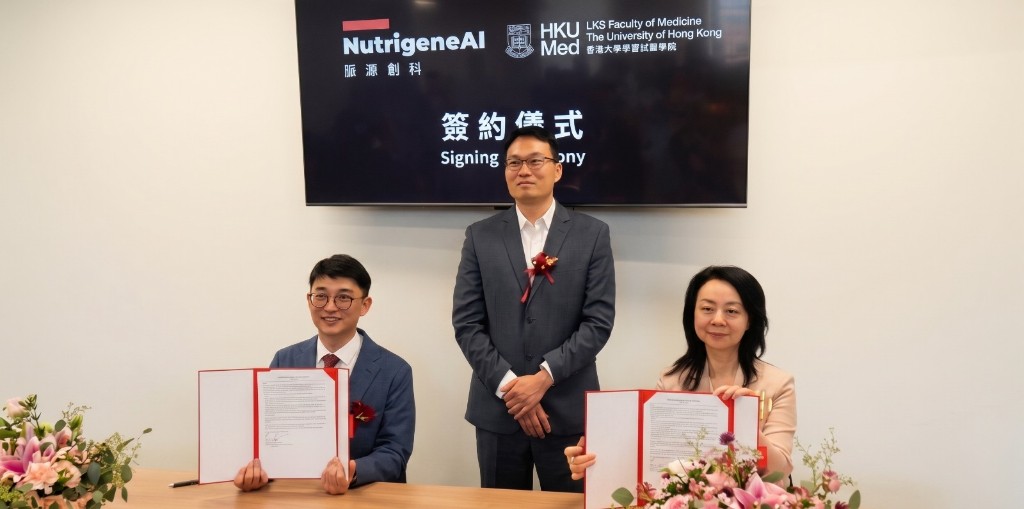
Hong Kong, August 21, 2026 — NutrigeneAI and the research team led by Professor Nancy Kwan Man of the Department of Surgery, School of Clinical Medicine at the University of Hong Kong (HKU) have announced an intention to collaborate. The initiative aims to utilize NutrigeneAI's functionally enhanced iPSC-derived endothelial cells for the Liver-in-Cube 3D bioprinting biomimetic liver cancer precision diagnostic and treatment platform developed by Professor Man's team, exploring the scientific and translational value of vascularization in the model.
Solid tumor models lacking a microvascular environment that closely resembles real tissue often compromise the drug response and translational value. Blood vessels are precisely the most difficult piece to fill in such models, which is also where NutrigeneAI's core technology lies.
Professor’s biomimetic liver cancer model connected with scalable vascular cells
Professor Nancy Kwan Man is the Chair Professor of Transplantation Oncology and Immunology at the Department of Surgery, School of Clinical Medicine, HKU. Her team has developed the Liver-in-Cube, a 3D bioprinting platform for constructing biomimetic liver cancer models used in precision medicine and drug response research.
NutrigeneAI's functionally enhanced iPSC-ECs are capable of large-scale production and serve as critical materials for constructing microvascular networks. The company is simultaneously advancing clinical directions in vascular repair and regeneration, enabling the same cell technology to serve both research models and therapeutic applications.
Validating the boost in biomimetic performance before discussing joint development and clinical referral
The proposed research will evaluate the potential contribution of iPSC-ECs to the vascularization of the Liver-in-Cube and its microvascular system, including the model's stability, biomimetic fidelity, and performance in drug screening.
Both parties may also explore joint research, technical co-development, academic publications, clinical translation pathways, as well as referrals for clinical resources and professional networks related to vascular and ischemic diseases.
Non-binding intent first, letting scientific results, not contracts, drive the next steps
The parties may also share investor and industry cooperation opportunities where appropriate to support the subsequent translation of complementary technologies.
This memorandum of understanding is a non-binding expression of intent; any research, human materials, clinical resources, intellectual property, data, or commercial arrangements are subject to approval by the applicable universities, ethics committees, regulatory bodies, and both parties, and will be governed by separate formal agreements.
When vascular regeneration technology enters a highly biomimetic 3D disease model, cells are no longer just potential therapeutic tools; they can also become a research foundation for a more accurate understanding of diseases and drug screening. — NutrigeneAI
About NutrigeneAI
NutrigeneAI focuses on iPSC-derived endothelial cells, vascular repair and regeneration, and cell therapy for ischemic diseases, while exploring their rational applications in tissue engineering, disease models, and translational research.